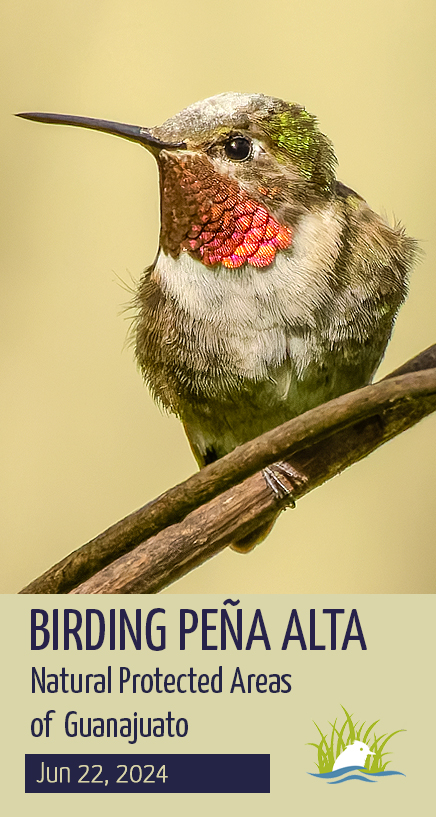
From October 19th to 23rd an incomparable Birding trip will be carried out in the sorroundings of Mexico City for our friends of Audubon Mexico. Perhaps you did not know it but, almost 70% of D.F. territory consists in Natural Protected Areas this represents a very rich environment for birds like the Magnificent Hummingbird,
Gray-barred Wren,
House Wren,
Bushtit (black-eared),
Golden-crowned Kinglet,
Ruby-crowned Kinglet,
Mexican Chickadee,
American Robin,
Hermit Thrush,
Golden-browed Warbler,
Slate-throated Whitestart,
Hermit Warbler,
Townsend's Warbler,
Yellow-rumped (Audubon's) Warbler,
Black-headed Grosbeak,
Yellow-eyed Junco,
House Sparrow, Red Warbler,
Strickland's Woodpecker,
Steller's Jay,
Green-striped Brush-Finch,
Rufous-capped Brush-Finch,
Slate-throated Redstart,
Crescent-chested Warbler,
Spotted Towhee,
Russet Nightingale-Thrush and a long etcetera.
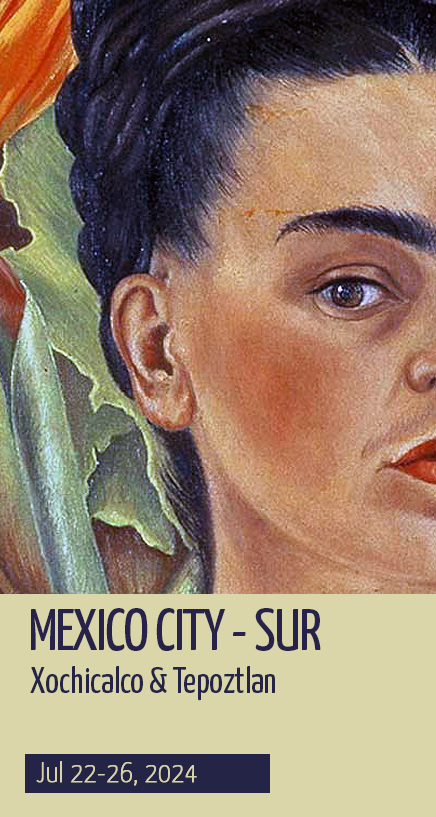
A hand-picked list of amazing spots will be visited, and we will be surprised not only for the rich ecosystems they house but for the historical and cultural value too. Xochimilco gardens and canals, as well as Xochicalco are listed as World Heritage by UNESCO.
In order to achieve a succesful and un forgettable trip we count on with the support of some special friends:
Gerardo del Olmo and Emilio Roldán from Bruja de Monte
Birding guides.
Marlene Ehrenberg from Rebozo
Xochimilco guide and Travelian consultant.
Ron Mader from Planeta.com
Providing a practical guide to ecotourism for our trip, through his Web portal.
For more detailed information about this trip, please check out the Itineray or the trip presentation.
As a part of our Mexico City Trip -designed exclusively for our friends of Audubon Mexico- with the support of Planeta.com, Rebozo and Bruja de monte; we will visit the arqueological site of Xochicalco where it's possible to find Lesser Ground Cuckoos,
Squirrel Cuckoos,
Lesser Roadrunners,
Hooded Orioles,
West Mexican Chachalacas,
Bridled Sparrows and many other species.
After birding in Xochicalco, we will visit the beautiful Lake of Coatelco for lunch; which is home of many other species as Great Egrets, Varied buntings, Tropical kingbirds, Barn swallow, Plovers, Great tailed grackles and more.
If you would like to know more about this trip you can download our 2 pages itinerary or the complete 30 pages Itinerary.
This WWF report uses complementary
measures to explore the changing state
of global biodiversity and of human
consumption.
The Living Planet Index
reflects the state of the planet’s ecosystems
while the Ecological Footprint shows the
extent and type of human demand being
placed on these systems.